

Worldwide Shipping Available

17-Sep-2026

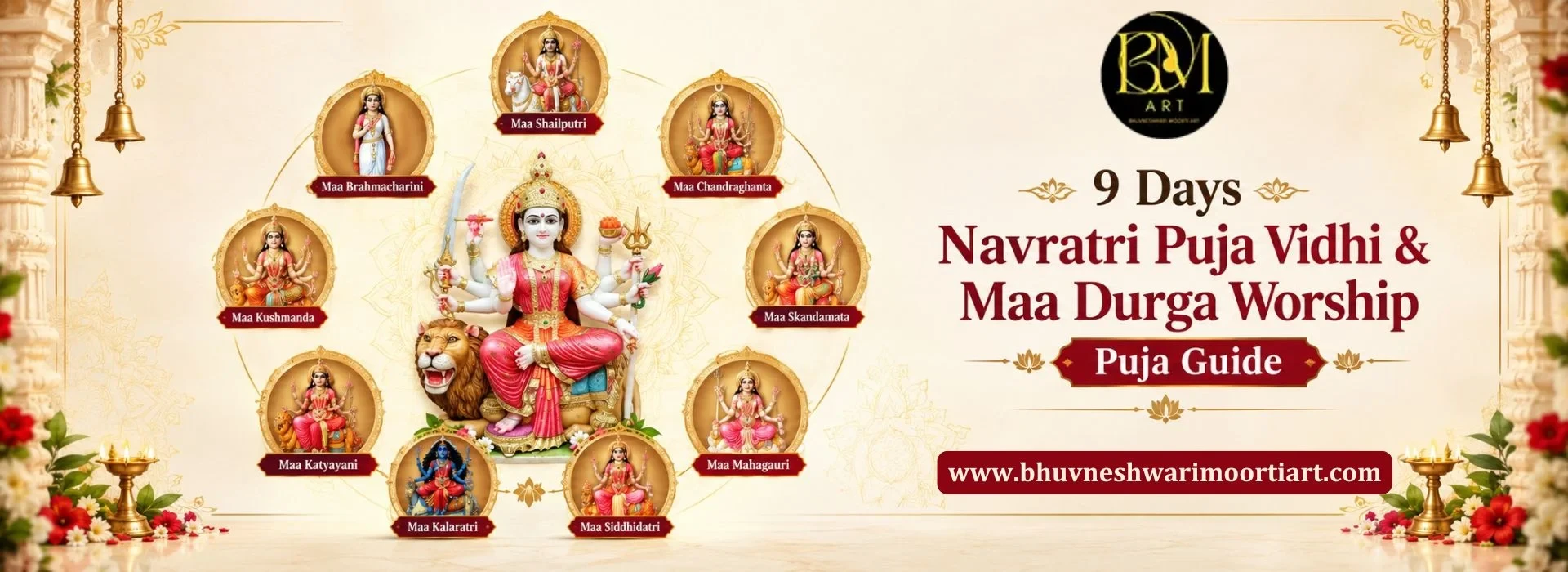
9 Days Navratri Puja Vidhi & Maa Durga Worship Puja Guide

9 Days Navratri Puja Vidhi & Maa Durga Worship Puja Guide

Navratri is a nine-day-long Hindu festival that includes worship of Goddess Durga in her nine forms. Each day holds its own significance, and devotees perform different prayers, offerings, fasts, rituals, and other practices. The Maa Durga marble statue can be kept in the prayer place as a form of the goddess.

Navratri Puja Vidhi & Maa Durga Worship Puja

During the festival of Navratri, people worship God through prayer, offering, lighting of diyas, performing of aarti, and worshipping nine forms of Maa Durga. It is ensured that the place where the worship takes place is cleaned and decorated by using flowers, idols of Maa Durga, etc.

Day 1: Maa Shailputri

  • Significance: The first day of Navratri is dedicated to worshipping Maa Shailputri. She represents strength, devotion, and stability.
  • Puja Vidhi: On the first day of Navratri, people can clean the puja room, light a diya, offer flowers and fruits, and recite the prayer of Maa Shailputri.

Day 2: Maa Brahmacharini

  • Significance: The second day in the Navratri festival is the day dedicated to Maa Brahmacharini. She symbolizes purity, devotion, and spirituality.
  • Puja Vidhi: Flowers, fruits, and sweets can be offered to Maa Brahmacharini. Meditation in praise of Maa Brahmacharini can be undertaken by her followers.

Day 3: Maa Chandraghanta

  • Significance: Maa Chandraghanta Puja is done on the third day. This deity is considered to be courageous, peaceful, and protective in nature.
  • Puja Vidhi: The puja may start by lighting the diya and an incense stick. It is possible to offer flowers, fruits, and sweets, with chanting of Durga being done.

Day 4: Maa Kushmanda

  • Significance: The fourth day of the Navratri festival is celebrated in praise of Maa Kushmanda. This goddess is related to power, positive thinking, and creativity.
  • Puja Vidhi: Offerings like flowers, fruits, and sweets can be made to Maa Kushmanda. An aarti can be performed as well at the conclusion of the prayer.

Day 5: Maa Skandamata

  • Significance: The worship of Maa Skandamata takes place on the fifth day. She represents the virtues of love, compassion, and power.
  • Puja Vidhi: The puja venue may be decorated with flowers and diyas. Fruits and sweets may be offered along with the prayers.

Day 6: Maa Katyayani

  • Significance: Goddess Katyayani is worshipped on the sixth day and is known to represent the attributes of valor and divine power.
  • Puja Vidhi: People can make offerings in terms of flowers, fruits, and sweets. Those observing fast can follow the customs of their families.

Day 7: Maa Kalaratri

  • Significance: Maa Kalaratri is worshipped on the seventh day. Traditionally, her looks have been associated with power and protection.
  • Puja Vidhi: It may include lighting up the diya and offering flowers and prayers. People can also do aarti after performing the puja.

Day 8: Maa Mahagauri

  • Significance: Maa Mahagauri is worshipped on Ashtami day. It is customary for her to denote purity, peace and compassion.
  • Puja Vidhi: Most families perform Kanya Puja on Ashtami based on their tradition. Flowers, fruits, sweets and others are some of the offerings that can be done along with the puja.

Day 9: Maa Siddhidatri

  • Significance: The ninth day is for worshipping Maa Siddhidatri. Maa Siddhidatri is regarded as divine in terms of divine blessings and spiritual awakening.
  • Puja Vidhi: Worshippers can conclude the nine-day puja ritual through prayers, aarti, and food offerings, as per family traditions.

Setting up the Maa Durga Puja Area

  • Select a clean place: For Puja, the place should be kept clean and organized. A clean pedestal can be prepared to keep the idol.
  • Keep the idol in an appropriate way: One can keep the Durga Maa marble murti on an adorned platform. The idol can be decorated using flowers, chunari, garlands and other decorations.
  • Keep diyas and flowers: One can keep flowers and diyas to make the puja area more devout. One can also use incense as per tradition.

Importance of a Marble Idol

  • Graceful appearance: A marble idol gives an eternal and graceful appearance. Detailed carving may bring out the traditional characteristics of Maa Durga.
  • Long-term use for worship: Well-made marble idols can be used for worship not just during Navratri. They can be kept permanently at a place of worship such as a home shrine.

Conclusion

The Navratri festival is one of the most revered festivals that help the devotees come close to Maa Durga in nine days of prayer, ritualistic practices, and devotion. A hand-carved Maa Durga marble statue would be a good addition to a traditional deity that can be worshipped all year round in the personal puja area. When buying an idol, the craftsmanship, detailing, and the traditional design are some of the factors that have to be considered while making the selection.

At Bhuvneshwari Moorti Art, a leading best marble statue maker in Jaipur, provide the beautifully carved traditional Maa Durga marble statues. Also, offer customization according to your needs and requirements. We also have complete marble temple for home and there is customization availabe in marble temples.

Latest Blogs